Other products
Ectofly
Active substance
ATC code
Species
Sheep.
Indications
For the treatment and control of headflies, and treatment of tick infestation and biting lice. For the prevention and treatment of blowfly strike.
Dose to be administered and administration route
To ensure administration of a correct dose, body weight should be determined as accurately as possible; accuracy of the dosing device should be checked.
On completion of each treatment cycle of the product and before the dosing gun is stored, immediately expel any remaining product in the dosing gun.
Administer by means of the recommended applicator gun as follows:
Blowflies:
Prevention of blowfly strike
|
Bodyweight |
Dose |
Doses per litre |
|
Up to 25 kg* |
20 ml |
50 |
|
25 to 40 kg |
30 ml |
33 |
|
Over 40 kg |
40 ml |
25 |
*Do not administer to animals of less than 12.5 kg bodyweight.
The dose should be limited to a maximum dose of 40 ml per animal
Apply as a fan-spray to the surface of the fleece on the back and hindquarters of the sheep using the Pour-On Gun fitted with the fan-spray nozzle. Half the dose should be applied to the shoulders, back and flanks, and half to the rump.
The distance between the nozzle and the fleece should be approximately 20 cm. Each dose will require 2 or 3 sweeps to apply. THE PRODUCT WILL PREVENT BLOWFLY STRIKE ONLY ON AREAS COVERED BY SPRAY. One application will give 6-8 weeks protection. Re-treat as required.
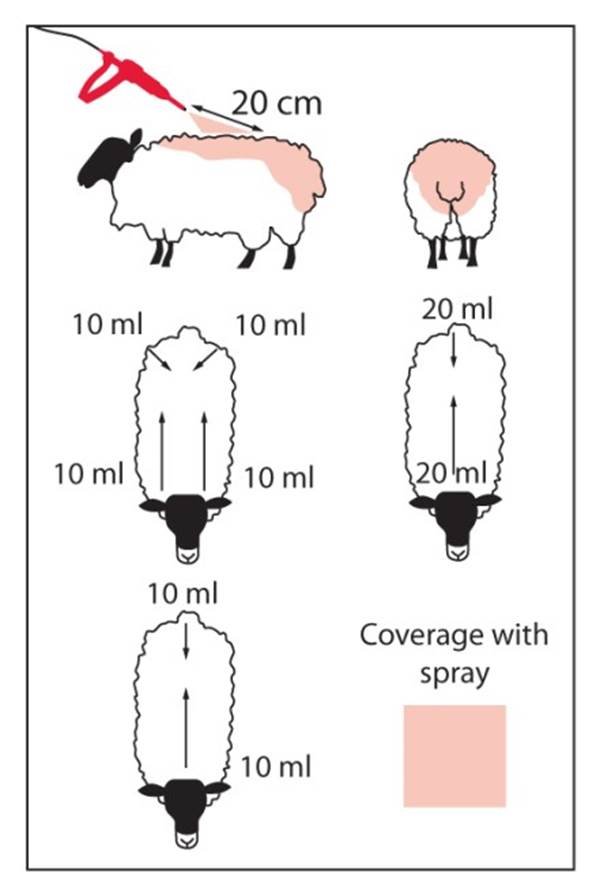
Treatment of blowfly strike
Apply directly to all the affected parts at the rate of 2.5 ml per 100 –150 cm2 (roughly the size of a hand). The T-bar nozzle should be used. Most strikes will require 5-10 ml. Ensure that all affected parts are treated. A single application is sufficient to ensure that larvae are expelled and killed within a few hours.
Lice: 5 ml per 20 kg bodyweight up to a maximum of 20 ml.
| Bodyweight | Dose | Doses per litre |
| Up to 20 kg | 5 ml | 200 |
| 21 to 40 kg | 10 ml | 100 |
| 41 to 60 kg | 15 ml | 66 |
| Over 60 kg | 20 ml | 50 |
Using the straight nozzle on the applicator gun, apply as a pin-stream from the shoulders to the rump along the middle of the backline.
Sheep may be treated off-shears or at any time during the year.
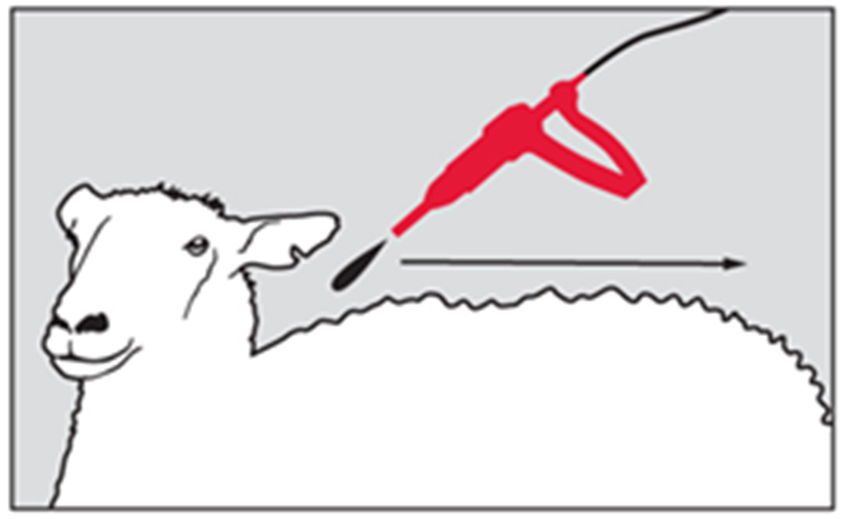
Ticks: Adult sheep and lambs greater than 10 kg: 10 ml per 20 kg bodyweight, up to a maximum of 40 ml. Lambs under 10 kg: 5 ml followed 3 weeks later by a 10 ml application.
|
Bodyweight |
Dose |
Doses per litre |
|
Up to 10 kg |
5 ml |
200 |
|
11 to 20 kg |
10 ml |
100 |
|
21 to 40 kg |
20 ml |
50 |
|
41 to 60 kg |
30 ml |
33 |
|
Over 60 kg |
40 ml |
25 |
Using the straight nozzle on the Pour-On Gun, apply as a pin-stream from the crown of the head to the top of the rump.
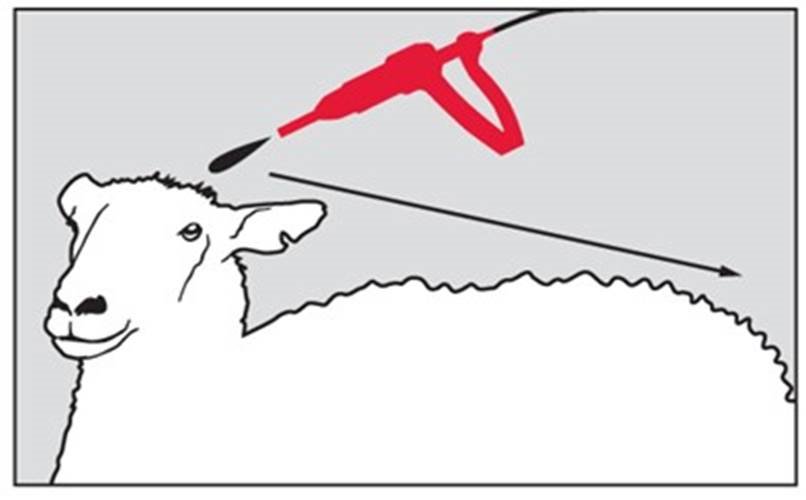
Headflies: 5 ml per animal irrespective of size.
Apply to the top of the head between the ears using the T-bar nozzle.
Take care not to apply product in the sheep’s eyes.
One application before the start of the headfly season will give up to 4 weeks protection. Re-treat as required.
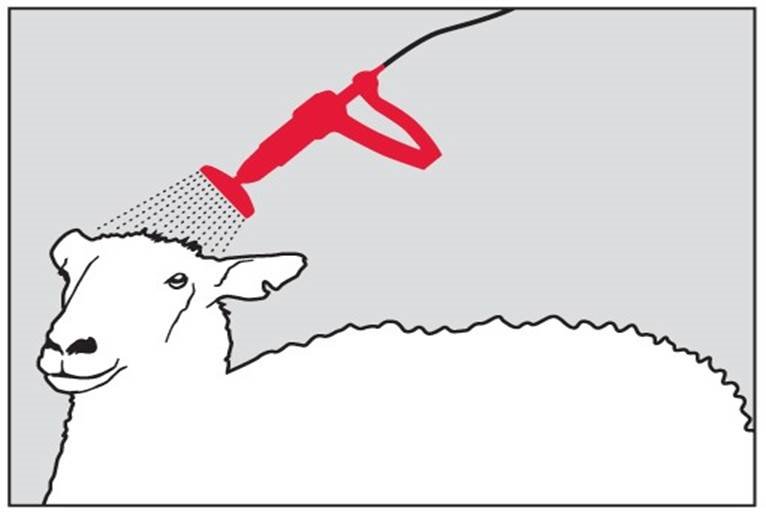
This product contains a dye to aid in the identification of treated animals. The colour is temporary and will fade from the fleece within 48 hours of application.
Adverse reactions
None known.
Reporting adverse events is important. It allows continuous safety monitoring of a veterinary medicinal product. Reports should be sent, preferably via a veterinarian, to either the marketing authorisation holder or its local representative or the national competent authority via the national reporting system. See the package leaflet for respective contact details.
Dispensing
POM-VPS TRUSTED SOURCE
SUMMRY OF PRODUCT CHARACTERISTICS
1. NAME OF THE VETERINARY MEDICINAL PRODUCT
Ectofly 12.5 mg/ml pour-on solution for sheep
2. QUALITATIVE AND QUANTITATIVE COMPOSITION
Each ml contains Active substance:
Cypermethrin (cis:trans / 80:20)………….. 12.5 mg Excipient:
|
Qualitative composition of excipients and other constituents |
Quantitative composition if that information is essential for proper administration of the veterinary medicinal product |
|
Green S Dye (E142) |
0.2 mg |
|
Diethylene glycol monobutyl ether |
|
Clear blue non-aqueous solution
3. CLINICAL INFORMATION
3.1 Target species
Sheep.
3.2 Indications for use for each target species
For the treatment and control of headflies, and treatment of tick infestation and biting lice. For the prevention and treatment of blowfly strike.
3.3 Contraindications
Not to be used in lambs less than one week old.
For the prevention of blowfly strike; do not administer to animals of less than 12.5 kg bodyweight.
Avoid treating very young lambs if the weather is unseasonably hot.
Do not use in cases of hypersensitivity to the active substance or to any of the excipients.
3.4 Special warnings
Frequent and repeated use of antiparasiticides from the same class may increase risk of development of resistance.
3.5 Special precautions for use
Special precautions for safe use in the target species:
Care must be taken not to apply the product right to the lamb’s tail, as a ewe recognises a young lamb partly by the smell of the tail area.
Blowflies are attracted by dirty, damp wool or open wounds. The most common site for fly strike is the rump due to soiling caused by diarrhoea and urine staining. The efficacy of the product is reduced in the presence of soiled or dirty wool. Therefore, sheep must be crutched (dagged) regularly and appropriate worm control measures employed.
Take care not to apply product in the sheep’s eyes. This precaution should be observed particularly when treating breeds with little wool on their heads.
Full operating and maintenance instructions, including details on the use of nozzles, are supplied with each Pour-On Gun. Please read carefully before use. Maintain gun carefully to ensure accurate dosage.
For external use only.
Special precautions to be taken by the person administering the veterinary medicinal product to animals
This product is harmful if swallowed and may cause skin, eye or respiratory irritation. This product may also cause hypersensitivity reactions.
Avoid skin and/or eye contact.
Avoid children from getting access to the product or treated animals.
Use in a well-ventilated area and avoid inhaling the vapour.
Wear eye protection, protective clothing, rubber gloves and boots when applying the product and handling the animal until the product has dried.
Wear a disposable face-mask when applying as a fan-spray for the prevention of blowflystrike.
Make sure when attaching the recommended applicator gun onto the container that the coiled retainer is secured onto the cap and the applicator.
Wash splashes from skin and eyes immediately with plenty of clean water. If irritation persists seek medical advice immediately and show the package leaflet to the physician. Remove contaminated clothing immediately and wash exposed skin with plenty of clean water.
Do not eat, drink or smoke whilst using the product. Wash hands immediately after use. In case of accidental ingestion or mouth contact, immediately rinse the mouth with plenty of water and seek medical advice.
Special precautions for the protection of the environment:
Cypermethrin is extremely toxic to aquatic and dung organisms
As a precautionary measure sheep must be kept away from watercourses for at least 12 hours following treatment (see ‘Environmental properties’). Given the risks to the environment the use of the product should be limited to one treatment per year per pasture.
Long term effects on dung insects caused by continuous or repeated use of pyrethroid ectoparasiticides cannot be excluded. Therefore repeated treatment of animals on the same pasture with a pyrethroid-containing product within a season should only be given in the absence of alternative treatments or approaches to maintain animal/flock health, as advised by a veterinarian.
3.6 Adverse events
None known.
Reporting adverse events is important. It allows continuous safety monitoring of a veterinary medicinal product. Reports should be sent, preferably via a veterinarian, to either the marketing authorisation holder or its local representative or the national competent authority via the national reporting system. See the package leaflet for respective contact details. 3.7 Use during pregnancy, lactation or lay
Pregnancy:
Can be used during pregnancy. Pregnant ewes must be handled with care.
3.8 Interaction with other medicinal products and other forms of interaction
The product must be applied only with the recommended applicator gun, as the product may have a detrimental effect on certain components of conventional dosing guns.
3.9 Administration routes and dosage
To ensure administration of a correct dose, body weight should be determined as accurately as possible; accuracy of the dosing device should be checked.
On completion of each treatment cycle of the product and before the dosing gun is stored, immediately expel any remaining product in the dosing gun.
Administer by means of the recommended applicator gun as follows:
Blowflies:
Prevention of blowfly strike
|
Bodyweight |
Dose |
Doses per litre |
|
Up to 25 kg* |
20 ml |
50 |
|
25 to 40 kg |
30 ml |
33 |
|
Over 40 kg |
40 ml |
25 |
*Do not administer to animals of less than 12.5 kg bodyweight.
The dose should be limited to a maximum dose of 40 ml per animal
Apply as a fan-spray to the surface of the fleece on the back and hindquarters of the sheep using the Pour-On Gun fitted with the fan-spray nozzle. Half the dose should be applied to the shoulders, back and flanks, and half to the rump.
The distance between the nozzle and the fleece should be approximately 20 cm. Each dose will require 2 or 3 sweeps to apply. THE PRODUCT WILL PREVENT BLOWFLY STRIKE ONLY ON AREAS COVERED BY SPRAY. One application will give 6-8 weeks protection. Re-treat as required.

Treatment of blowfly strike
Apply directly to all the affected parts at the rate of 2.5 ml per 100 –150 cm2 (roughly the size of a hand). The T-bar nozzle should be used. Most strikes will require 5-10 ml. Ensure that all affected parts are treated. A single application is sufficient to ensure that larvae are expelled and killed within a few hours.
Lice: 5 ml per 20 kg bodyweight up to a maximum of 20 ml.
Bodyweight Dose Doses per litre
Up to 20 kg 5 ml 200
21 to 40 kg 10 ml 100
41 to 60 kg 15 ml 66
Over 60 kg 20 ml 50
Using the straight nozzle on the applicator gun, apply as a pin-stream from the shoulders to the rump along the middle of the backline.
Sheep may be treated off-shears or at any time during the year.

Ticks: Adult sheep and lambs greater than 10 kg: 10 ml per 20 kg bodyweight, up to a maximum of 40 ml. Lambs under 10 kg: 5 ml followed 3 weeks later by a 10 ml application.
|
Bodyweight |
Dose |
Doses per litre |
|
Up to 10 kg |
5 ml |
200 |
|
11 to 20 kg |
10 ml |
100 |
|
21 to 40 kg |
20 ml |
50 |
|
41 to 60 kg |
30 ml |
33 |
|
Over 60 kg |
40 ml |
25 |
Using the straight nozzle on the Pour-On Gun, apply as a pin-stream from the crown of the head to the top of the rump.

Headflies: 5 ml per animal irrespective of size.
Apply to the top of the head between the ears using the T-bar nozzle.
Take care not to apply product in the sheep’s eyes.
One application before the start of the headfly season will give up to 4 weeks protection. Re-treat as required.

This product contains a dye to aid in the identification of treated animals. The colour is temporary and will fade from the fleece within 48 hours of application.
3.10 Symptoms of overdose (and where applicable, emergency procedures and antidotes)
Toxic signs in mammals are tremors, hyperexcitability, salivation, chorea, athetosis and paralysis, rarely leading to death. Usually, the signs disappear rapidly and the animals recover, generally within a week. There is no specific antidote, but symptomatic therapy can be given if considered necessary.
3.11 Special restrictions for use and special conditions for use, including restrictions on the use of antimicrobial and antiparasitic veterinary medicinal products in order to limit the risk of development of resistance
Not applicable.
3.12 Withdrawal periods
Meat and offal: 8 days.
Milk: 5 days
4. <PHARMACOLOGICAL INFORMATION
4.1 ATCvet code: QP53AC08
4.2 Pharmacodynamics
Cypermethrin is a neuropoison acting on the axons in the peripheral and central nervous system of insects by interacting with sodium channels.
4.3 Pharmacokinetics
Synthetic pyrethroids are generally metabolised in mammals through ester hydrolysis, oxidation and conjugation and there is no tendency to accumulate in tissues.
Environmental properties
Cypermethrin is moderately persistent and non-mobile in soil. It is extremely toxic to aquatic invertebrates. Cypermethrin is toxic to dung insects and to honey bees. Long term effects on dung insects caused by continuous or repeated use of the product cannot be excluded.
5. PHARMACEUTICAL PARTICULARS
5.1 Major incompatibilities
None known.
5.2 Shelf life
Shelf life of the veterinary medicinal product as packaged for sale: 2 Years.
Shelf life after first opening of the immediate packaging: 3 months.
5.3 Special precautions for storage
Do not store above 25°C.
Protect from direct sunlight.
Store in tightly closed original container in a safe place. Store away from food, drink and animal feeding stuffs.
5.4 Nature and composition of immediate packaging
White high-density polyethylene flat bottom containers with polypropylene closures and induction heat-sealed wadding,
1 L bottle
2.5 L bottle
5 L bottle
Box of 1 x 5 L bottle and 1 x 2.5 L bottle
Not all pack sizes may be marketed.
5.5 Special precautions for the disposal of unused veterinary medicinal product or waste materials derived from the use of such products
Medicines should not be disposed of via wastewater or household waste.
The veterinary medicinal product should not enter water courses as Cypermethrin is EXTREMLY DANGEROUS for fish and other aquatic organisms.
Do not contaminate ponds, waterways or ditches with the product or empty container.
Use take-back schemes for the disposal of any unused veterinary medicinal product or waste materials derived thereof in accordance with local requirements and with any national collection systems applicable to the veterinary medicinal product concerned.
6. NAME OF THE MARKETING AUTHORISATION HOLDER
Bimeda Animal Health Limited
7. MARKETING AUTHORISATION NUMBER
Vm 50146/4017
8. DATE OF FIRST AUTHORISATION
05 April 2011
9. DATE OF THE LAST REVISION OF THE SUMMARY OF THE PRODUCT CHARACTERISTICS
July 2025
10. CLASSIFICATION OF VETERINARY MEDICINAL PRODUCT
Veterinary medicinal product subject to prescription.
Find more product information by searching for the ‘Product Information Database’ on www.gov.uk.

Approved: 10 October 2025

| Art. Nr. | 50146/4017 |
|---|---|
| GTIN | • • • • • • • • • 3107 |